



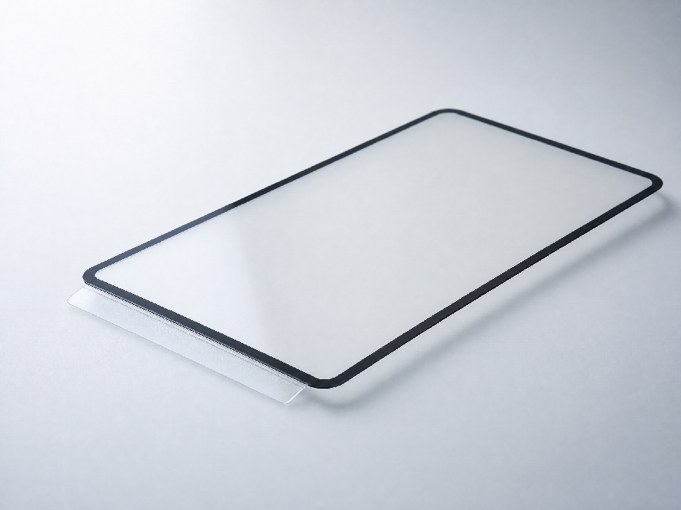
FUXIN manufactures custom AG anti-glare cover glass with factory pre-applied OCA optical adhesive for touchscreen and display-module assembly. The AG surface helps reduce distracting reflections on the front side, while the OCA is laminated to the back side of the processed cover glass in a controlled environment to create a ready-to-bond component.
After the customer completes final optical lamination to the touch sensor or display module, the bonded stack can eliminate the internal air gap between the bonded layers, reduce internal interface reflections, improve visual contrast and create a more integrated display structure.
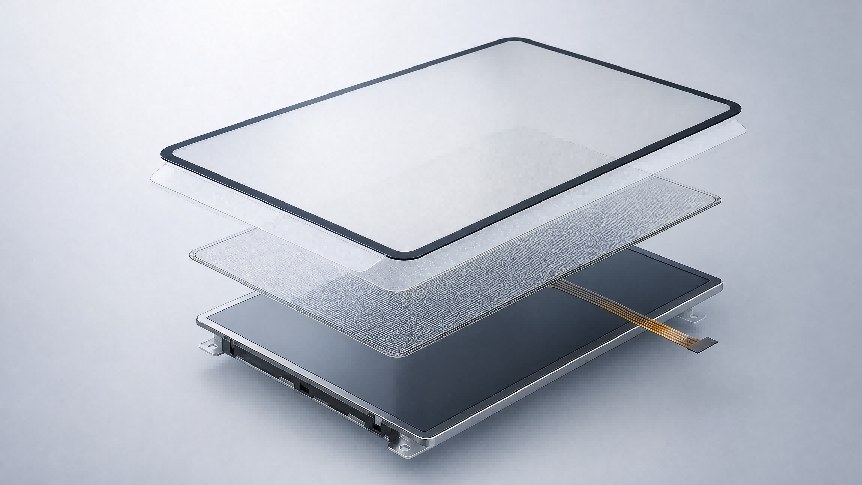
This product combines a finished anti-glare cover glass with a pre-laminated optically clear adhesive layer. The OCA is protected by a release liner and remains ready for the customer's final lamination process.
Layer / Step | Function |
Front Surface | AG etched or compatible AG-treated surface for glare reduction |
Cover Glass | Custom processed soda-lime or aluminosilicate glass |
Printing / Functional Areas | Black bezel, logos, icons, sensor windows or masking areas where required |
Rear Surface | Factory pre-applied OCA optical adhesive |
Release Liner | Protects the adhesive until final lamination |
Customer Assembly | Final lamination to PCAP touch sensor, LCD/OLED module or other compatible optical stack |
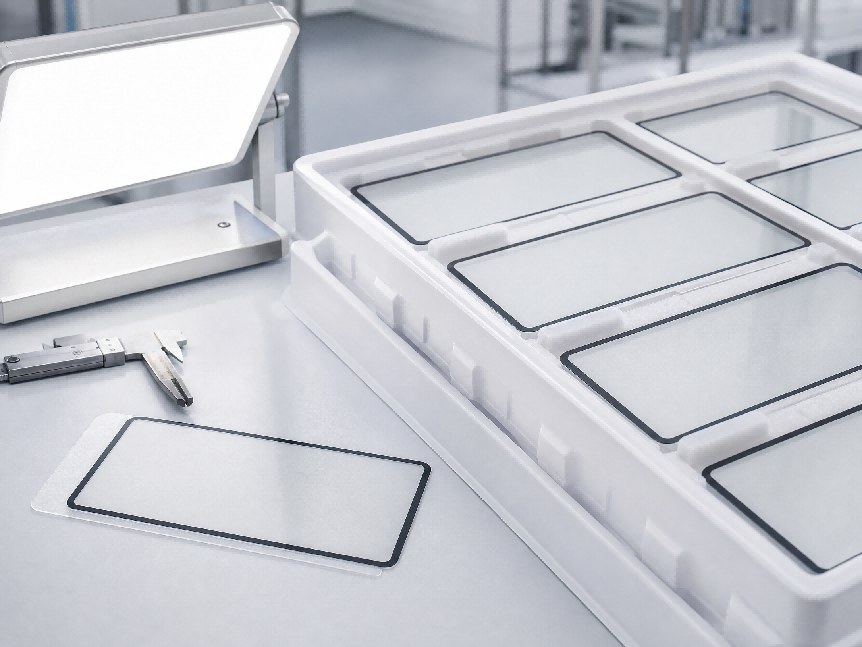
Fewer Customer Preparation Steps: The cover glass arrives with the optical adhesive already positioned, allowing the customer to proceed directly to the next bonding stage.
Controlled Adhesive Placement: Factory application can help control OCA alignment, coverage area and edge position according to the drawing.
Reduced OCA Handling: Pre-applied adhesive reduces manual film handling and helps lower the risk of dust, fingerprints, misalignment or liner damage before module bonding.
More Consistent Assembly Input: A repeatable glass + OCA subassembly can reduce process variation before final lamination.
Suitable for Printed and Functional Glass: OCA can be coordinated with black borders, transparent windows, sensor zones and other rear-side design requirements.
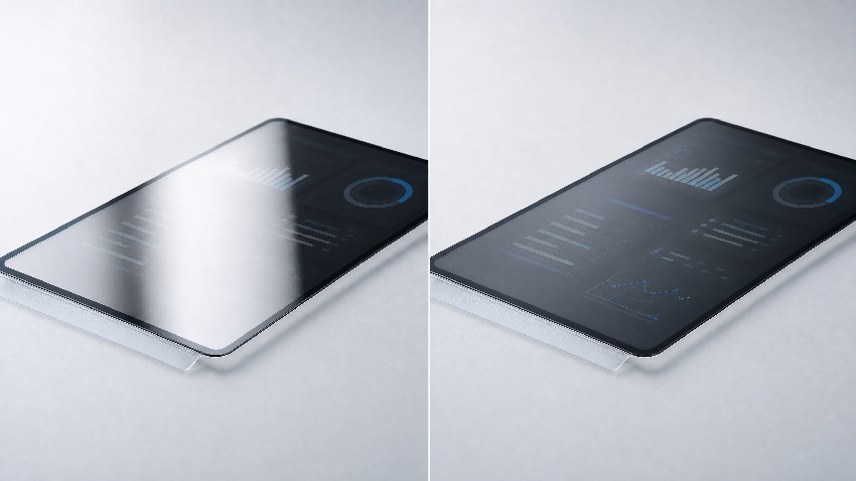
AG and OCA should not be treated as interchangeable glare-reduction technologies. The AG surface acts at the front-air interface by diffusing disturbing reflections. OCA acts inside the display stack after lamination by replacing an air gap with an optically clear adhesive layer.
Item | AG Surface | OCA Optical Bonding |
Main Location | Front surface of cover glass | Between cover glass and touch sensor / display |
Main Function | Reduces visible glare from ambient light | Removes the bonded-layer air gap and reduces internal optical interfaces |
Typical Benefit | Improved readability under bright ambient light | Improved contrast, reduced parallax and integrated module structure |
When It Works | Immediately after AG processing | After final optical lamination |
Item | Standard AG Cover Glass | AG Glass with Pre-Applied OCA |
AG Surface | Yes | Yes |
OCA Adhesive | Customer applies separately | Factory pre-applied |
Customer Preparation | More adhesive handling steps | Fewer preparation steps |
OCA Positioning | Controlled during customer process | Pre-controlled to the approved glass drawing |
Clean Handling | More film handling before lamination | Reduced OCA handling |
Best Fit | Air-gap, frame-bonded or customer-managed optical bonding | Projects that want a ready-to-bond AG cover-glass subassembly |
OCA and liquid optical adhesives can both be used in full optical bonding, but they require different assembly processes. Pre-applied OCA is most attractive when the customer wants a clean, repeatable film-based adhesive layer prepared on the cover glass before final lamination.
Item | Pre-Applied OCA | OCR / LOCA |
Adhesive Form | Solid optical film | Liquid optical resin |
Cover-Glass Delivery | Can be supplied pre-laminated | Usually dispensed during module bonding |
Handling | Film alignment and liner management | Dispensing, flow and curing control |
Geometry | Well suited to compatible flat structures | Can be useful for some gaps or complex structures |
Process Control | Thickness set by the selected film | Thickness controlled by dispensing and module geometry |
Best Use | Repeatable flat-panel assembly and ready-to-bond subcomponents | Specialized module structures and liquid-bonding processes |
Engineering note: The source draft includes fixed ranges such as 0.7-3.9 mm glass, 50-250 µm OCA and 89-92% transmittance. These values should be treated as project-dependent rather than universal product specifications. OCA selection in particular depends on adhesive brand, module geometry, temperature range and bonding process.
Glass Material | Soda-lime or aluminosilicate (chemically strengthened) |
Thickness | 0.7 mm – 3.9 mm+ (thicker for high-impact) |
AG Treatment | Single- or double-sided; adjustable gloss/haze |
Transmittance | ≥89–92%+ (depending on AG level) |
OCA Thickness | Standard films (e.g., 50–250 µm+ available) |
Surface Options | AG + optional AF / AR coatings |
Printing | Black matrix borders, logos, icons |
Size Capability | From small handheld to large industrial panels |
Operating Environment | Wide temperature range; UV-resistant materials |
Industrial HMI: Control panels and machine interfaces where AG readability and repeatable optical bonding are both important.
Outdoor & Semi-Outdoor Touch Displays: Displays exposed to bright ambient light where AG glare control and a bonded optical stack can improve readability.
Kiosks & Public Terminals: High-use touch interfaces that benefit from a ready-to-bond cover-glass component and customized printing.
Additional applications can include transportation, medical and rugged portable displays when the selected OCA, glass material and surface treatments are validated for the required environment.
How to Bond Cover Glass with OCA / PSA to LCD Panel:https://www.fuxinglasses.com/news/how-to-bond-cover-glass-with-oca-psa-to-lcd-panel/
Information | What to Provide |
Cover Glass Drawing | Overall size, active area, holes, cutouts, corner radius and edge profile |
Display Structure | Touch sensor / LCD / OLED stack and bonding interface |
Glass | Material, thickness and strengthening requirement |
AG Requirement | Haze, gloss, Ra, sparkle or reference sample |
Printing | Black border, logo, icon and transparent-window artwork |
OCA Brand / Type | Specified adhesive model if already approved, or allow FUXIN to recommend a compatible option |
OCA Thickness | Required film thickness or target bonding gap |
OCA Coverage | Full-area or defined adhesive shape / keep-out zones |
Release Liner | Peel direction, tab or liner requirement if applicable |
Touch System | PCAP or other sensor configuration |
Operating Environment | Temperature, humidity, UV or chemical requirements |
Quantity | Prototype quantity and expected annual volume |
Yes. OCA can be laminated to the rear side of a compatible AG cover glass before shipment, allowing the customer to receive a ready-to-bond subassembly for the next touchscreen or display lamination step.
Pre-applied OCA means the adhesive film has already been laminated to the cover glass. Full optical bonding is completed only after that cover glass is finally laminated to the touch sensor or display module.
Yes. AG treatment controls glare at the outer surface, while OCA is the optical adhesive used between bonded layers. They perform different functions and can be used together.
OCA thickness should be selected according to surface flatness, module structure, printing step height, bonding gap and adhesive requirements. The best thickness is project-specific.
Yes. Pre-applied OCA can be prepared for compatible PCAP touch assemblies. Final material selection and lamination conditions should be confirmed with the actual sensor and module stack.
Yes. Black borders, logos, icons and transparent functional windows can be printed before OCA lamination. OCA coverage and step-height tolerance should be reviewed against the printed design.
Yes. AG + AF cover glass can be evaluated with pre-applied OCA when the surface stack, rear-side treatment and optical adhesive are compatible.
Please provide the glass drawing, active area, printing artwork, AG target, glass thickness, OCA type and thickness, adhesive coverage area, release-liner requirement, display stack and expected production volume.

Copyright © 2026 Fuxin Glass (Dongguan City) Technology Co., Ltd. All Rights Reserved