


FUXIN provides custom glass tempering and strengthening for touchscreen cover glass, industrial display glass, automotive interfaces and other precision glass components. We support both chemical strengthening by ion exchange and physical / thermal tempering, with process selection based on glass composition, thickness, size, geometry, strength target, optical quality and final application.
Soda-lime and aluminosilicate glass are the main substrates we process. For thin or high-optical-quality cover glass, chemical strengthening is often preferred because it can increase surface compressive stress without the thermal deformation associated with conventional heat tempering. For thicker structural glass where breakage behavior and production efficiency are important, thermal tempering may be more suitable.
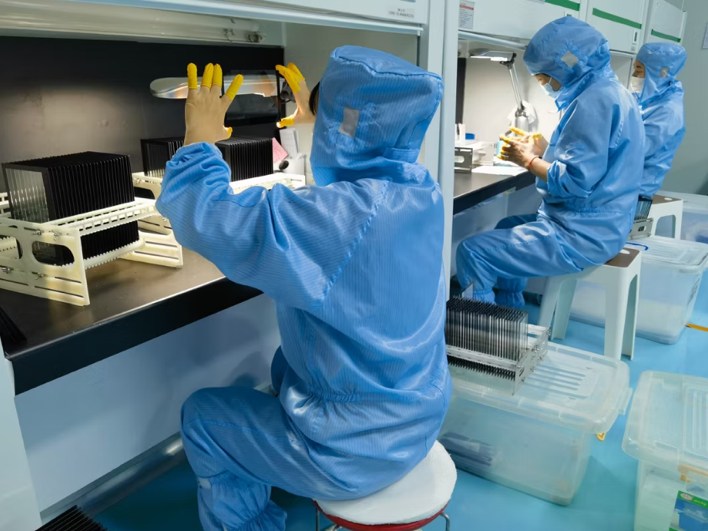
Fuxin Glass is a professional factory specializing in custom tempering of touch display cover glass. We support chemical tempering and physical tempering for soda-lime glass, aluminosilicate glass, and other glass materials. Delivering high-strength, high-flatness, customized toughened cover glass solutions for touchscreen, Smart access control, automotive displays, industrial control panel, and more special optical application senarios —helping brands enhance impact resistance, scratch resistance, and overall reliability.
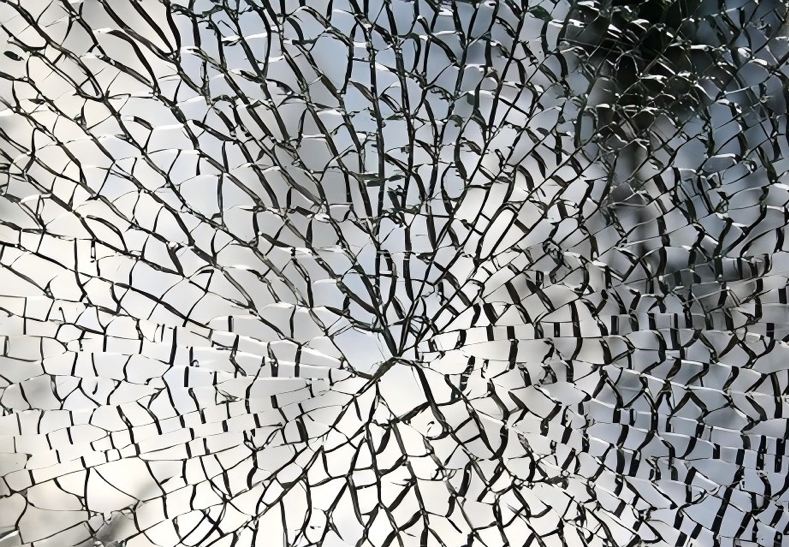
We focus on tempering and customization of touch display cover glass, with complete chemical and physical/thermal tempering production lines. We flexibly process mainstream raw glass materials including soda-lime glass and aluminosilicate glass. Whether you need high surface compressive stress for ultra-thin electronic covers or rapid mass production for thicker structural glass, we match the optimal process based on thickness, strength targets, optical requirements, and application scenarios.
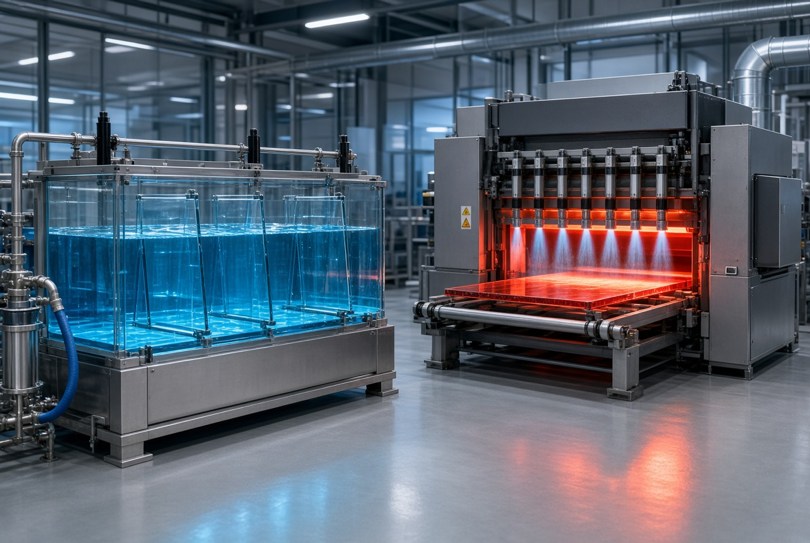
l Dual processes: chemical tempering (ion exchange) and physical tempering (thermal toughening), covering ultra-thin to medium-thickness specifications
l Compatible with both soda-lime and aluminosilicate glass to meet varying cost and performance needs
l Customizable surface compressive stress (CS), depth of layer (DOL), thickness, size, and shape
l Stable processes with low optical distortion, suitable for both mass production and small-batch trials
l Full quality control to help customers shorten the cycle from sampling to mass production.
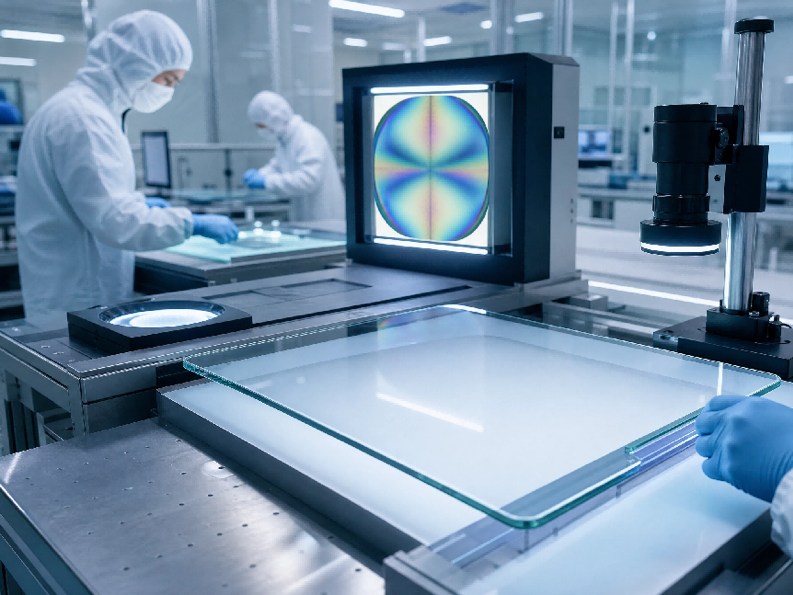
Soda-lime glass offers clear cost advantages and is widely used in standard touch displays and protective covers. We provide:
l Chemical Tempering: Low-temperature ion exchange process ideal for thin sheets and applications requiring high flatness. Effectively improves surface strength and scratch resistance.
l Physical Tempering: Heating to the appropriate temperature followed by rapid, uniform cooling to create surface compressive stress. Suitable for medium-thickness and above, with good fragmentation safety for mass production.
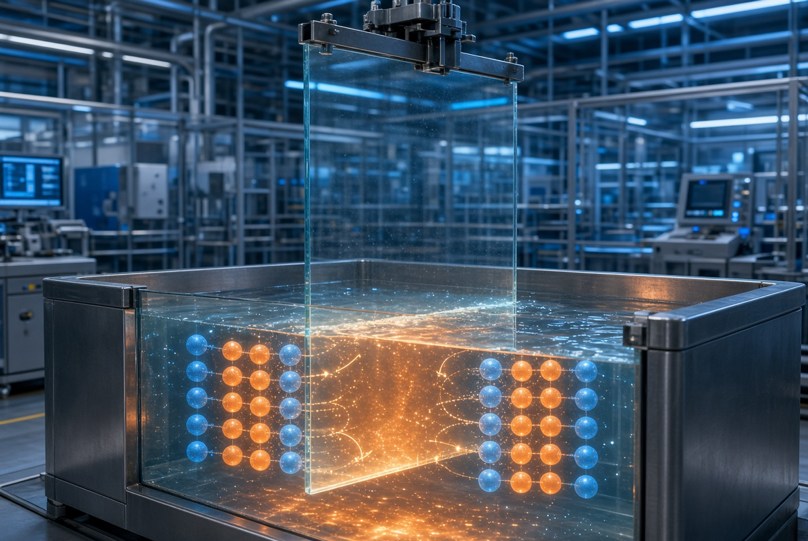
Ideal for cost-sensitive consumer electronics covers and industrial touchscreen protection glass.
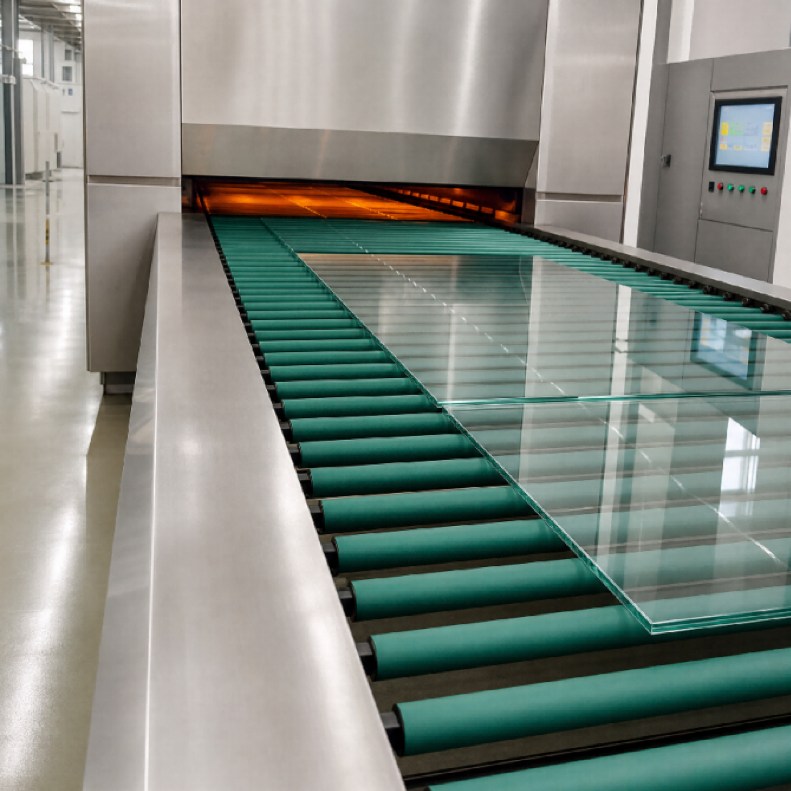
Aluminosilicate glass (including high-alumina and lithium aluminosilicate systems) features high ion-exchange efficiency and is the preferred choice for premium touch covers. We specialize in:
Chemical Tempering (Primary Method): Single-step or two-step/multi-step ion exchange processes. Precise exchange of K⁺/Na⁺/Li⁺ enables high surface compressive stress (CS often reaching hundreds to over 1,000 MPa) and controllable depth of layer (DOL of tens to over 100 μm). The two-step process is especially suitable for lithium aluminosilicate glass, balancing high surface strength with deep stress layers to significantly improve drop and impact resistance.
Our Advantages include no deformation for ultra-thin specifications, excellent optical quality, and outstanding scratch and impact resistance. Widely used in smartphone covers, foldable screen protection, high-end tablets, and automotive displays.
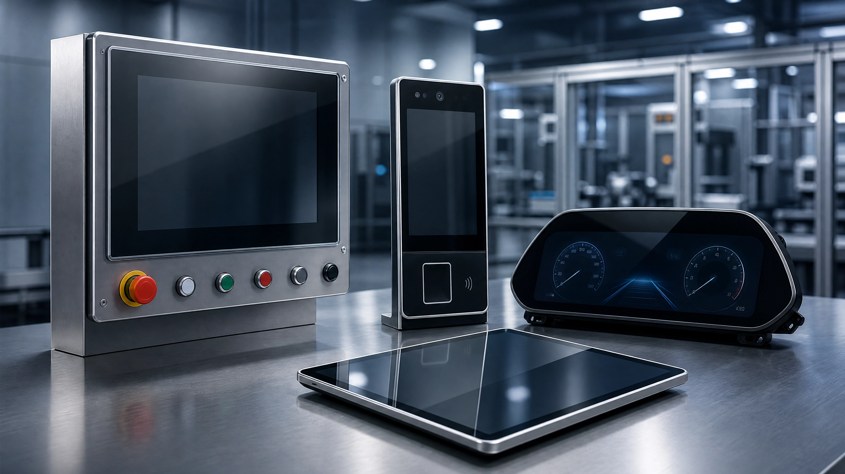
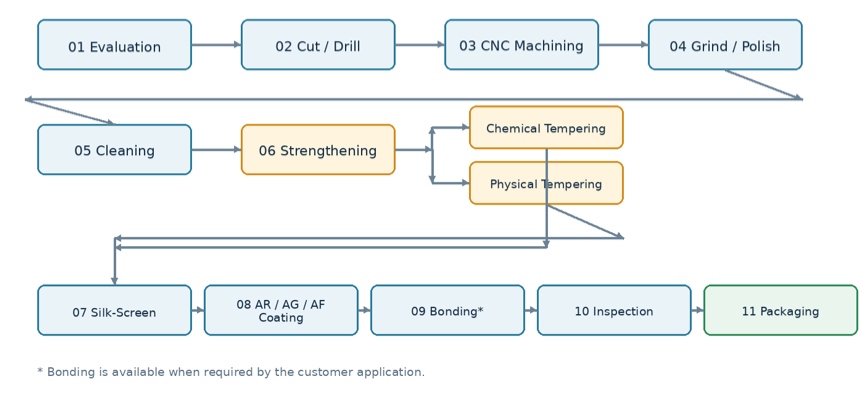
Fuxin Glass offer full-process customization from raw glass to finished cover glass from sampling to mass production, covering the following process flow:
Engineering evaluation→Cutting/drilling→CNC precision machining→Grinding & polishing→ Cleaning→Strengthening (chemical / physical)→Silk-screen printing→Optical coating (AR/ AG / AF)→bonding (if required)→Inspection & packaging
Customizable parameters (subject to actual glass and process):
Glass Material: Soda lime, Alumina silicate, or others.
Thickness range: Ultra-thin to medium thickness
Chemical tempering: High CS and controllable DOL, ideal for electronic covers
Physical tempering: Suitable for structural strength and safe fragmentation requirements
Shapes: Flat, 2.5D/3D after hot bending, etc.
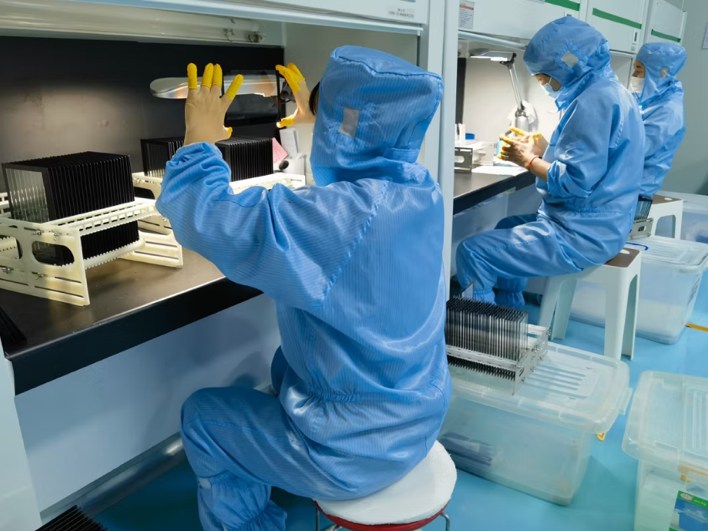
As a professional touch display cover glass tempering factory, Fuxin Glass operate mature chemical and physical tempering lines and understand the process differences between soda-lime and alumina silicate glass. We provide optimal solutions for different applications. Strict process control and inspection systems ensure uniform stress and stable performance in every batch, helping customers reduce defect rates and enhance end-product competitiveness.
We prioritize precise inquiry matching. Welcome to provide your specific technical requirements (material, size, thickness, edge and corner, target strength, application scenarios, drawing etc.) to get optimal customized solution and quotation.
Chemical tempering (ion exchange) is ideal for ultra-thin glass with high optical quality and no deformation. Physical tempering (thermal toughening) suits thicker glass and offers good fragmentation safety for mass production.
Soda-lime glass is more cost-effective and can use either chemical or physical tempering. Aluminosilicate glass is better suited to chemical tempering (especially the two-step process), achieving higher CS and deeper DOL with superior impact resistance—ideal for high-end touch covers.
Yes. We support chemical and physical tempering for both soda-lime glass (cost-effective) and aluminosilicate glass (higher strength, preferred for premium touch covers).
We handle ultra-thin to medium-thickness glass, with chemical tempering especially suitable for thin electronic cover glass.
Yes. We provide fast sampling and stable large-volume supply to meet both trial and production needs.
Please provide glass material, thickness, dimensions, target CS/DOL or strength requirements, and application scenarios. We will promptly provide process recommendations and a quotation.
l Both chemical strengthening and thermal tempering are available, allowing the process to be matched to different glass materials, thicknesses and strength requirements.
l Experience with soda-lime and aluminosilicate cover glass for touch displays, industrial equipment, automotive interfaces and other custom applications.
l Integrated processing from raw glass selection, cutting and CNC machining through strengthening, printing and functional surface treatment.
l Project-specific CS / DOL and mechanical-performance targets can be evaluated instead of using one generic tempering specification for all glass.
l Prototype and small-batch validation support before mass production to reduce process and assembly risk.

Copyright © 2026 Fuxin Glass (Dongguan City) Technology Co., Ltd. All Rights Reserved