



 2026-07-21
 116
116 AR (anti-reflective) coating, also known as anti-transmission thin film, relies on light destructive interference to cut surface reflectance and boost light transmittance. This article breaks down its optical physical principle, mainstream industrial deposition technologies including magnetron sputtering & thermal evaporation, full production workflow, and cross-industry application values for display, medical, solar & optical equipment manufacturers.
For a single-layer coating, the ideal refractive index is approximately the square root of the product of the substrate and air indices (around 1.22 for glass). Multi-layer designs using materials such as SiO₂, TiO₂, ZrO₂, and MgF₂ achieve ultra-low reflectance across broad wavelength ranges—reducing surface reflection from ~4% per interface on uncoated glass to under 0.5% or even 0.1%.
This results in higher throughput, reduced glare and ghosting, improved contrast, and enhanced overall system efficiency.
The advantages of high-performance AR coatings extend far beyond basic optics:
l Superior Light Transmission: Boosts eficiency in multi-element systems like camera lenses and telescopes.
l Reduced Glare and Eye Strain: Critical for eyewear, computer screens, and automotive displays.
l Enhanced Durability and Performance: Protects against environmental factors while minimizing stray light in laser systems.
l Energy Efficiency: Improves photovoltaic output in solar applications.
From consumer electronics and medical devices to aerospace optics and high-end photography, AR anti-reflective coatings are indispensable for meeting today’s demanding performance standards.
The mainstream manufacturing process for AR films demands extremely high precision in thickness (nanometer-level) and uniformity. Vacuum deposition is the primary process, supplemented by other methods. A typical process is as follows:
Cleaning: Ultrasonic cleaning, organic solvent cleaning, plasma cleaning, etc., to remove oil, dust, and particles.
Inspection: Checking for surface defects to ensure optical-grade flatness.
Drying/Activation: Sometimes surface activation is performed to improve adhesion.
Thermal Evaporation: Heating materials (such as MgF₂, SiO₂) in a high-vacuum chamber causes them to evaporate, and atoms/molecules are deposited onto the substrate. The equipment is relatively simple and suitable for single-layer or simple multilayer films.
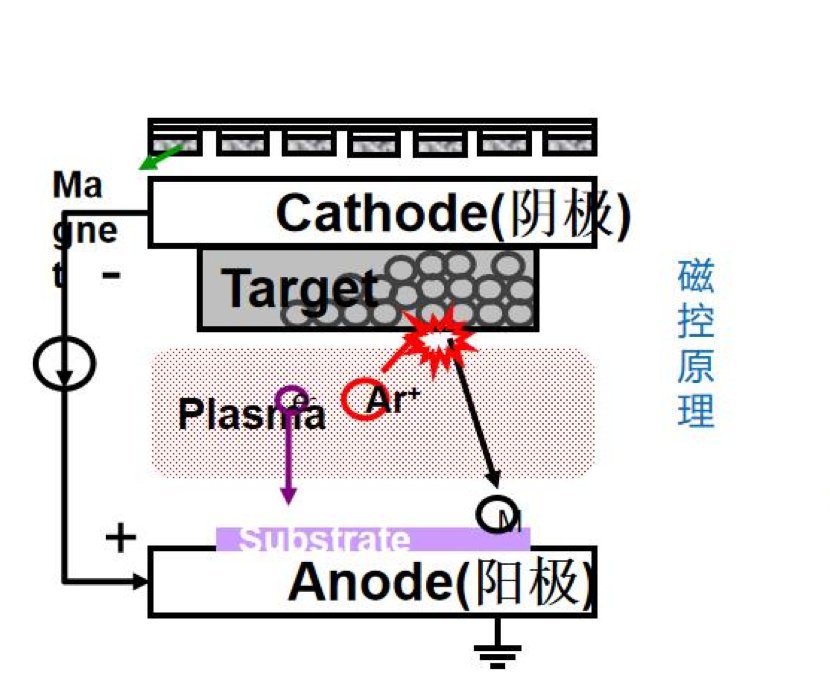
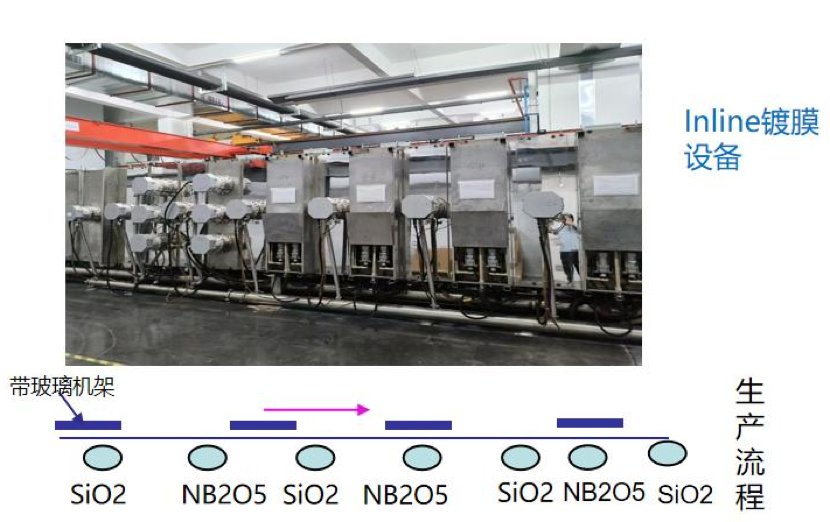
Magnetron Sputtering: Sputtering atoms from a target by bombarding it with ions, depositing them into a film. The film has good density, strong adhesion, and high uniformity, suitable for precision multilayer AR films, and is currently the mainstream industrial method.
Process: Under vacuum conditions (10⁻³~10⁻⁶ Pa), the deposition rate, thickness, and layer sequence are precisely controlled (thickness is monitored using a quartz crystal oscillator), typically requiring multiple alternating deposition layers.
Sol-Gel method: A chemical solution method suitable for large-area or complex-shaped substrates. A sol is applied via dip coating, spin coating, etc., followed by drying/heat treatment to form a film. Lower cost, but sometimes the density and durability are not as good as the vacuum method.
Chemical Vapor Deposition (CVD): Suitable for specific materials, such as diamond films.
Annealing/baking: Improves film stability.
Inspection:Spectroscopic testing (reflectance/transmittance curves), adhesion testing, abrasion/environmental resistance testing.
Protective layer: Sometimes a hydrophobic/scratch-resistant coating is added.

Copyright © 2026 Fuxin Glass (Dongguan City) Technology Co., Ltd. All Rights Reserved