



 2026-08-26
 162
162 In the competitive world of touch screen manufacturing, selecting the right glass thickness and tempering process for cover glass is critical. Whether you're developing smartphone panels, industrial HMIs, medical devices, or large interactive displays, the choice between physical tempering and chemical tempering directly impacts strength, flatness, optical quality, touch sensitivity, and production feasibility. As a specialized factory focused on custom touch screen cover glass processing, we regularly handle ultra-thin and standard-thickness glass substrates. Here’s a practical breakdown based on industry standards and our manufacturing capabilities.
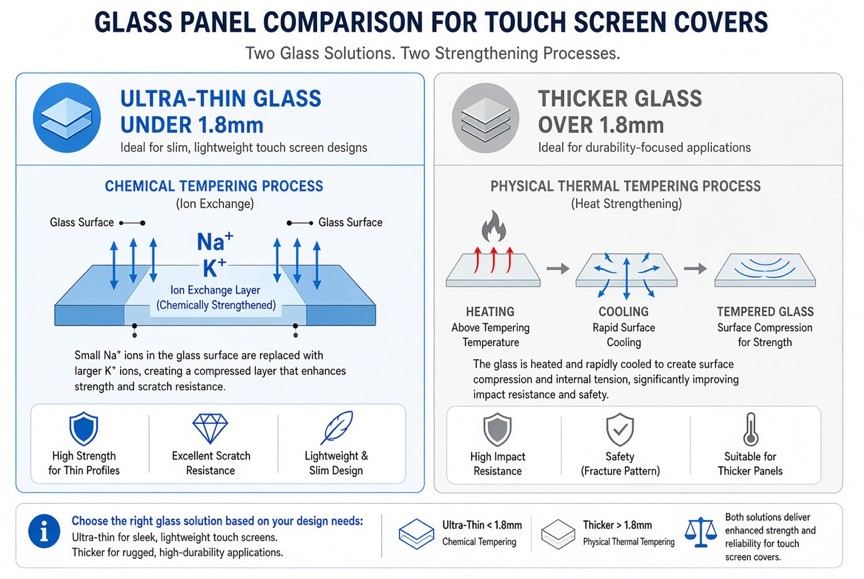
Ultra-thin glass (typically 0.55mm, 0.7mm, 1.1mm, or 1.5–1.8mm) is widely used for consumer electronics, portable devices, and slim industrial panels where lightweight design and high touch responsiveness are priorities.
Most practical touch screen cover glass sizes for <1.8mm material fall within 7 to 32 inches (diagonal). Common production-friendly dimensions stay under approximately 36 × 48 inches (about 914 × 1220 mm) for the finished cover, depending on the original sheet size and handling requirements. Larger formats are possible with advanced chemical strengthening furnaces but require careful process control to maintain yield and flatness.
Physical (thermal) tempering becomes challenging below roughly 2mm because it is difficult to create a sufficient temperature gradient between the surface and core. This often leads to warpage, inconsistent stress, or incomplete strengthening. Chemical tempering solves this by exchanging sodium ions with larger potassium ions in a molten salt bath (typically 380–450°C), forming a high compressive stress layer (often 400–900+ MPa) without significant deformation. It is the industry standard for thin cover glass used in touch applications.
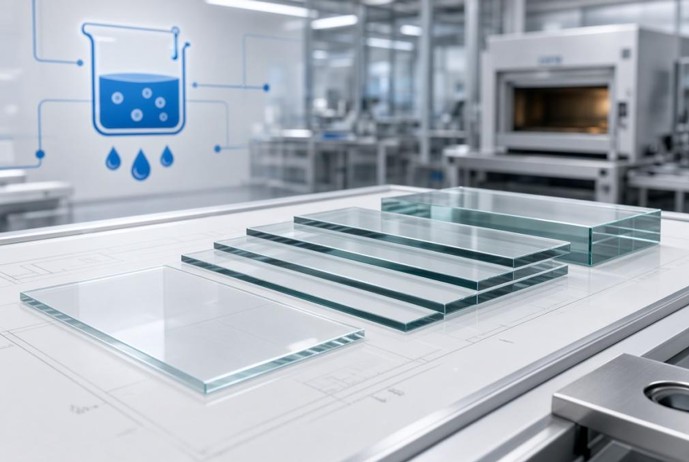
Thicker cover glass (1.8mm–3mm and above, commonly up to 4–6mm or more for rugged use) is preferred for industrial touch panels, outdoor kiosks, medical equipment, and high-impact environments that require stronger mechanical protection (higher IK ratings).
Finished touch screen cover glass can typically be produced from 10 inches up to 55 inches or larger (diagonal), with many facilities supporting panels in the 15–40 inch range as standard. Maximum dimensions are limited more by the tempering equipment and logistics than by the glass itself—often reaching edge lengths of 2000–3000+ mm.
1.8mm to ~3mm: Chemical tempering remains highly effective and often preferred for superior flatness and optical quality.
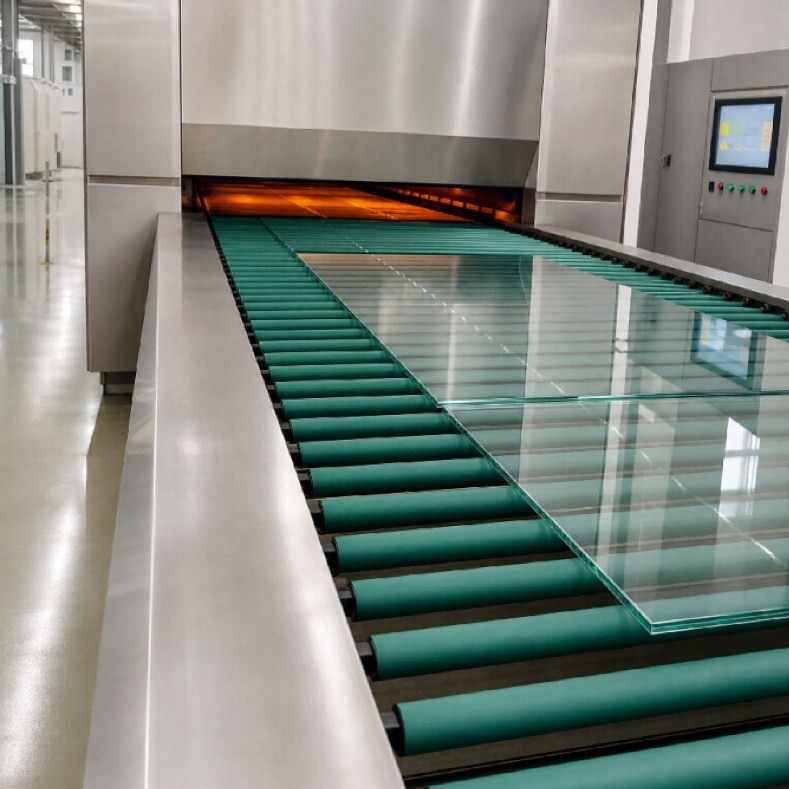
≥3mm: Full physical tempering is usually the better choice for true safety-glass performance (breaks into small blunt particles). Chemical strengthening can still be used when maximum surface hardness or complex shapes are needed.
Regardless of whether the raw glass is under or over 1.8mm, modern touch screen cover glass requires precise secondary processing. Our factory supports a full range of surface and edge treatments compatible with both chemical and physical tempering routes:
l Precision CNC machining (cutting, shaping, hole drilling, notching, and complex contours)
l Edge finishing (grinding, polishing, chamfering, and radius treatments)
l Silk-screen printing (black borders, icons, logos, multi-color options)
l Optical coatings: AR (anti-reflective), AF (anti-fingerprint / oleophobic), AG (anti-glare)
l Combination coatings (AR+AF, AG+AF, etc.)
l Special treatments such as diamond-like carbon (DLC) or other hard coatings where required
l Cleaning and inspection protocols optimized for high optical clarity and lamination readiness
These processes are performed with tight tolerances suitable for capacitive (PCAP) touch integration, ensuring excellent signal transmission and visual performance.
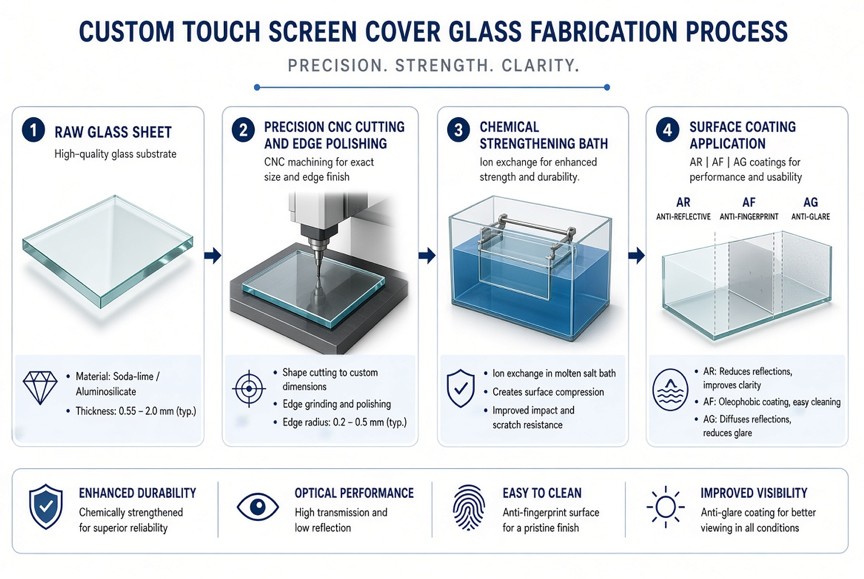
Choosing the correct thickness, strengthening method, and surface finish early in the design stage reduces cost, improves yield, and optimizes both durability and touch experience. Thin glass (<1.8mm) prioritizes chemical strengthening for flatness and strength-to-weight ratio. Thicker glass opens the door to physical tempering when granular breakage safety is essential. Fuxin Glass provide end-to-end custom processing—from raw material selection and CNC precision work through strengthening and advanced coatings—tailored to your specific size, strength (CS/DOL), and optical requirements.
Learn more about our custom glass tempering services
No. The source article uses 1.8 mm as a practical guide for thin touch-cover glass, not as an absolute rule. Chemical strengthening is usually the first method to evaluate for thin glass because it preserves flatness and optical quality well, but the final decision depends on glass composition, size, geometry and target performance.
Yes. The source article specifically notes that chemical strengthening can remain highly effective in this range and may be preferred when flatness, optical quality or complex geometry is important.
Thermal tempering becomes more practical as glass thickness increases and is especially relevant when structural strength or safety-fragmentation behavior is required. The actual minimum feasible thickness depends on equipment, size, material and geometry.
Not necessarily. Thickness contributes to structural capacity, but final reliability also depends on glass composition, edge quality, strengthening process, holes and cutouts, residual stress and the mechanical test requirement.
Provide the glass material, thickness, dimensions, drawing, holes or cutouts, edge requirements, target CS/DOL or mechanical test, optical requirements, application and any printing, coating or bonding requirements.
Yes. The source article describes support for precision CNC machining, edge finishing, silk-screen printing, AG/AR/AF surface treatments, combination coatings, cleaning and inspection in addition to strengthening.

Copyright © 2026 Fuxin Glass (Dongguan City) Technology Co., Ltd. All Rights Reserved