


 2026-08-04
 279
279 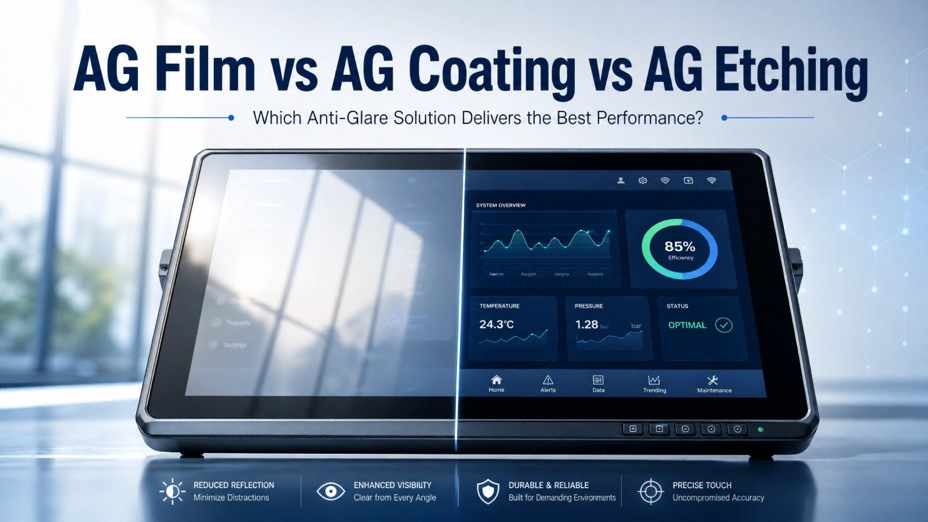
Anti-glare (AG) glass is one of the most widely used surface treatment solutions for touchscreen cover glass. By creating a controlled light-diffusing surface, AG glass reduces unwanted reflections and improves display readability in bright indoor environments, outdoor applications and industrial operating conditions.
For OEM touchscreen products, choosing the correct anti-glare solution is critical because different technologies provide different performance levels in durability, optical clarity, touch feeling, cleaning resistance and manufacturing cost.
The three main anti-glare solutions used in cover glass manufacturing are AG film, AG coating and chemically etched AG glass. Although all three methods can reduce glare, their structures and long-term performance are significantly different.
This article compares AG film vs AG coating vs AG etching, helping product designers, engineers and OEM buyers select the most suitable anti-glare glass solution for touchscreen applications.
For long-life OEM touchscreen cover glass applications, chemically etched AG glass is usually the preferred solution because the anti-glare texture is created directly on the glass surface without an additional film or coating layer.
AG Film: A laminated anti-glare film applied onto glass. It provides easy replacement and flexibility but depends on film quality, adhesive performance and environmental resistance.
AG Coating: An anti-glare coating layer applied onto the glass surface. It offers flexible optical adjustment and cost-effective performance for many commercial applications.
AG Chemical Etching: A permanent surface treatment that creates micro-texture directly on glass, providing excellent durability for demanding OEM applications.
l AG film is suitable for retrofit projects, prototypes and applications requiring replaceable anti-glare protection.
l AG coating provides flexible control of haze and gloss, making it suitable for indoor displays and cost-sensitive projects.
l Chemically etched AG glass provides permanent anti-glare performance and is widely used for industrial HMI, medical and automotive displays.
l Higher haze does not always mean better performance. Optical balance between glare reduction and image clarity is essential.
l OEM buyers should evaluate AG glass samples under real display conditions before mass production.
AG (Anti-Glare) technology is a surface treatment process used to reduce reflections on glass surfaces. Unlike standard clear glass that produces strong mirror reflections, AG glass creates a controlled micro-texture that diffuses reflected light and improves display visibility.
For touchscreen cover glass applications, anti-glare performance is not only about creating a matte appearance. A high-quality AG glass solution should achieve a balance between glare reduction, optical clarity, touch feeling, durability and long-term reliability.
OEM manufacturers commonly use AG glass for industrial HMI displays, automotive touchscreens, medical equipment interfaces, interactive whiteboards, smart control panels and outdoor terminals where display readability is critical.
Modern touchscreen products are used in increasingly complex environments, including sunlight exposure, factory lighting, frequent touching and repeated cleaning. Traditional clear cover glass may create strong reflections that affect user experience and display readability.
Anti-glare glass for touchscreen applications helps reduce reflected light while maintaining image quality. For OEM projects, selecting the correct AG surface treatment can improve product reliability and reduce future maintenance requirements.
As an OEM glass manufacturer, Fuxin Glass provides customized anti-glare glass solutions including chemically etched AG glass, AG coating glass, AG + AF glass and customized touchscreen cover glass according to customer specifications.
AG film is a polymer-based anti-glare layer laminated onto glass. The film usually contains a textured hard coating surface that scatters reflected light and improves viewing comfort.
Because AG film is added after glass manufacturing, it provides flexibility for retrofit applications, prototypes and projects requiring replaceable anti-glare protection.
l Easy installation and replacement
l Suitable for prototypes and small-volume production
l Lower initial manufacturing cost
l Long-term performance depends on film material, adhesive and hard coating quality
AG coating is a surface treatment method where anti-glare materials are applied onto the glass surface and cured to create a light-scattering layer.
The optical performance of AG coated glass depends on coating formulation, particle distribution, coating thickness, surface preparation and manufacturing control.
l Flexible adjustment of haze and gloss
l Suitable for indoor displays and commercial applications
l Cost-effective solution for many touchscreen projects
AG chemical etching creates microscopic surface structures directly on glass through controlled chemical treatment.
Unlike AG film and AG coating, the anti-glare texture becomes part of the glass surface itself. This provides excellent stability and eliminates risks such as film peeling or coating delamination.
l Permanent anti-glare surface structure
l Excellent durability for long-life OEM products
l Suitable for industrial, automotive and medical applications
| Comparison Factor | AG Film | AG Coating | AG Chemical Etching |
| Surface Structure | Polymer anti-glare film laminated onto glass | Additional anti-glare coating layer applied on glass surface | Micro-texture created directly on the glass surface |
| Durability | Depends on film material, adhesive and protective coating | Depends on coating formulation and curing quality | Permanent surface treatment with excellent stability |
| Scratch Resistance | Depends on film hard coating performance | Depends on coating hardness and adhesion | Mainly depends on glass substrate strength |
| Optical Adjustment | Limited by film structure | Flexible adjustment of haze, gloss and appearance | Controlled through etching parameters |
| Touch Feeling | Polymer film surface feeling | Depends on coating texture | Natural glass touch experience |
| Recommended Applications | Prototype, retrofit and replaceable solutions | Indoor commercial displays and cost-sensitive products | Industrial HMI, automotive, medical and outdoor displays |
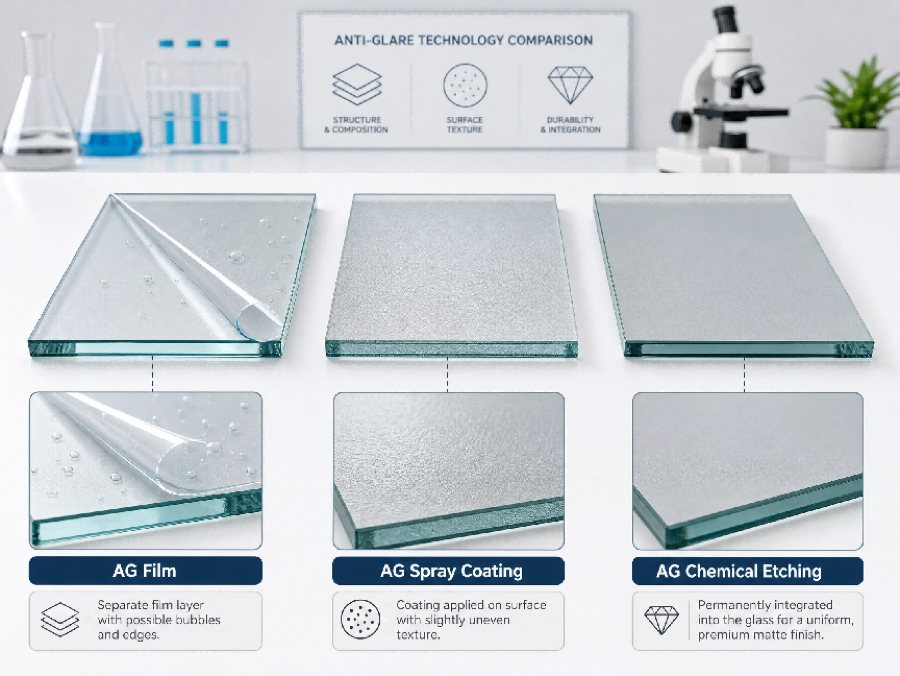
When selecting anti-glare glass for touchscreen applications, engineers should evaluate multiple optical parameters instead of focusing on only one specification. The ideal AG glass solution should balance glare reduction, image quality and user experience.
Haze measures the amount of light scattered when passing through glass. Higher haze can provide stronger anti-glare performance, but excessive haze may reduce display clarity and contrast.
Gloss represents the amount of reflected light from the glass surface. Lower gloss values usually create a stronger matte appearance and reduce visible reflections.
Clarity determines how clearly images and text can be viewed through the cover glass. High-quality AG glass should minimize glare while maintaining excellent image sharpness.
Surface texture affects sparkle performance, touch feeling and optical uniformity. For high-resolution displays, AG surface structures require precise control to avoid visible grain effects.
Anti-glare glass is widely used in industries where display readability, durability and user interaction are important. Different applications require different AG performance levels and surface treatment solutions.
l Industrial HMI Displays: AG glass improves visibility for factory equipment and control panels exposed to strong lighting conditions.
l Automotive Displays: Anti-glare cover glass helps drivers clearly view dashboard screens and infotainment systems under sunlight.
l Medical Equipment: AG glass supports clear image viewing and frequent cleaning requirements in healthcare environments.
l Interactive Displays: Large-size AG glass reduces reflections and improves touch interaction experience.
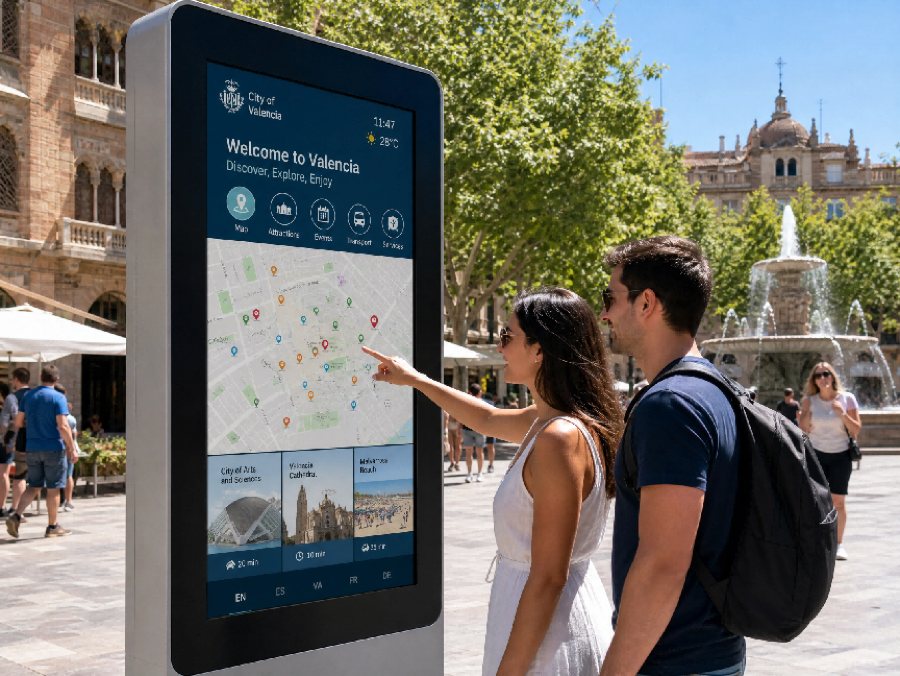
l Outdoor Touchscreens: Chemically etched AG glass provides stable optical performance under demanding environments.
Selecting the right anti-glare glass solution depends on product requirements, application environment and expected service life. OEM manufacturers should evaluate durability, optical performance, touch experience and production requirements together.
| Application | Recommended AG Solution | Main Reason |
| Prototype / Temporary Display | AG Film | Easy replacement and lower initial cost |
| Indoor Commercial Display | AG Coating or Low-Haze AG Etching | Balance between optical performance and manufacturing cost |
| Industrial HMI Panel | Chemically Etched AG Glass | Long service life and excellent surface stability |
| Medical Display | AG + AF Glass | Requires readability, cleanability and durability |
| Automotive Display | Customized AG Glass Solution | Requires optical tuning and environmental reliability |
| Outdoor Touchscreen | Chemically Etched AG Glass | Stable performance under sunlight and harsh environments |
To receive an accurate quotation and technical recommendation from an OEM glass supplier, buyers should provide detailed project information including:
l Glass size, thickness and product drawings
l Glass material requirements, such as soda lime glass or aluminosilicate glass
l Target haze, gloss, clarity and light transmittance values
l Touchscreen type and display specifications
l Environmental requirements including temperature, UV exposure and cleaning conditions
l Additional requirements such as AF coating, AR coating, printing, CNC processing and tempering
Fuxin Glass is an OEM glass manufacturer specializing in customized touchscreen cover glass solutions. We provide anti-glare glass for industrial displays, automotive electronics, medical equipment, interactive devices and other touch applications.
Our AG glass manufacturing capabilities include:
l Chemically etched AG glass
l AG coating glass solutions
l AG + AF anti-fingerprint glass
l Custom tempered cover glass
l Silk screen printing and secondary processing
With complete glass processing capabilities including cutting, CNC machining, edge processing, chemical strengthening, coating and printing, Fuxin Glass supports customized OEM projects from prototype development to mass production.
AG film is a laminated polymer layer applied onto glass, while chemically etched AG glass creates a permanent micro-texture directly on the glass surface. Etched AG glass usually provides better long-term durability.
AG coating can be used for some outdoor products, but durability depends on coating formulation and environmental requirements. Chemically etched AG glass is often selected for long-term outdoor applications.
Yes. AG and AF technologies are commonly combined for touchscreen cover glass to provide both glare reduction and fingerprint resistance.
Chemically etched AG glass is commonly recommended for industrial HMI displays because it provides stable optical performance, excellent durability and resistance to frequent touching and cleaning.
AG film, AG coating and AG chemical etching each have different advantages. AG film provides flexibility, AG coating offers cost-effective optical adjustment, while chemically etched AG glass provides a permanent anti-glare solution for demanding OEM touchscreen applications.
For OEM glass projects, the best anti-glare solution should be selected based on application requirements, optical performance, durability expectations and manufacturing conditions.

Copyright © 2026 Fuxin Glass (Dongguan City) Technology Co., Ltd. All Rights Reserved