



 2026-05-06
 48
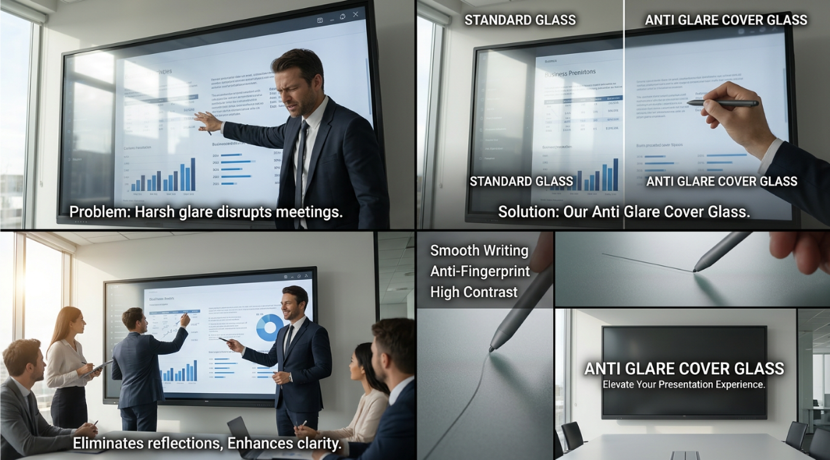
48 In today’s display industry, from tablets and industrial monitors to conference machines and outdoor kiosks, AG cover glass plays a key role in creating a clear and comfortable viewing experience. Unlike ordinary glass, which reflects harsh light and causes distracting glare, AG glass diffuses incoming light to reduce reflections while maintaining excellent image clarity and readability.
The core of AG cover glass production lies in creating a micro-textured surface that changes the way light is reflected. These micron-level textures can be formed through either chemical etching or physical spraying/coating.
Chemical etching uses hydrofluoric acid (HF) to corrode the glass surface and create a fine, permanent microstructure. This method offers high light transmittance, excellent anti-glare performance, and strong durability. However, the process is relatively complex and requires strict handling of chemical waste.
Physical spraying or coating applies a special anti-glare solution to the glass surface, forming a functional micro-textured film. This method is more flexible and cost-effective, making it widely used in mass production. However, compared with chemical etching, its abrasion resistance and coating adhesion may be lower depending on materials and process control.
Below is the typical production process using the mainstream physical spraying method as an example.
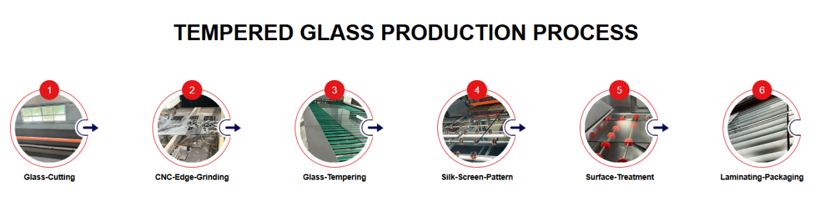
At this stage, the main goal is to complete the mechanical processing of the glass and significantly improve its strength.
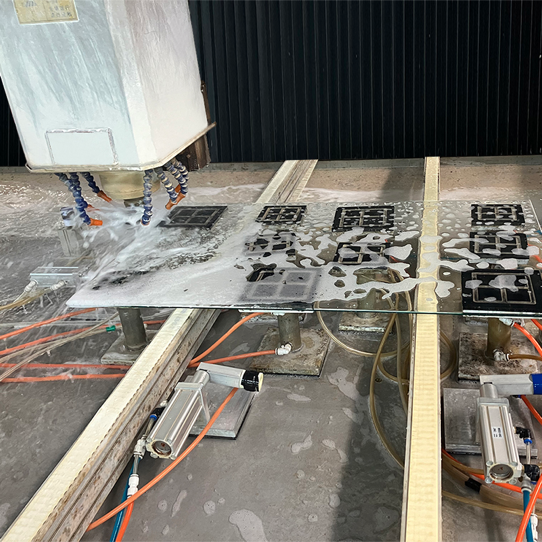
Large sheets of raw glass are first processed into the required shape and size. This includes precision cutting, CNC machining, drilling, edge chamfering, and edge polishing. These steps not only ensure dimensional accuracy but also help reduce micro-cracks along the edges.
The glass is then thoroughly cleaned using specialized cleaning equipment and ultrasonic technology to remove dust, oil, and other contaminants. After that, plasma cleaning is used to activate the glass surface, improving the adhesion of the subsequent AG coating.
The glass is heated to approximately 600°C–700°C and then rapidly cooled by high-pressure air on both sides. This process creates compressive stress on the surface and tensile stress inside the glass, increasing its strength by four to five times compared with ordinary glass. If broken, tempered glass shatters into small blunt particles rather than sharp shards, improving safety.
After tempering, the glass is cooled to room temperature and cleaned again to prepare for the next coating stage.
For products requiring a 2.5D or 3D curved design, the glass can be formed into the required curved shape through a hot bending process under high temperature. This step is only used for curved cover glass applications.
After tempering, the glass enters the key stage of surface functional coating.
Strict Cleaning Before Coating
Before entering the AG coating line, the glass undergoes another rigorous cleaning process, often including plasma treatment, to ensure the surface is completely free of dust, oil, and other impurities.
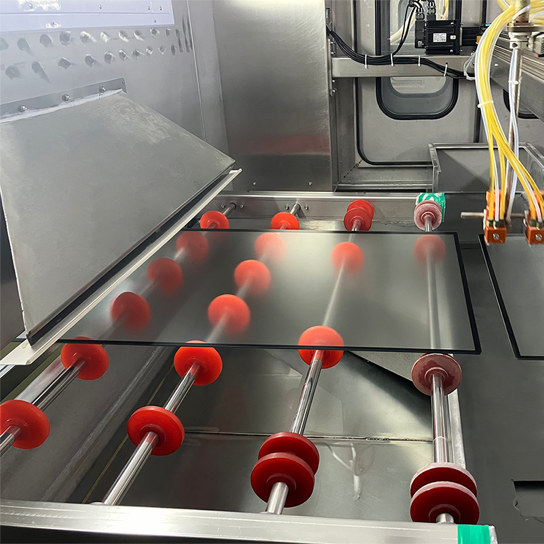
In a cleanroom environment, typically Class 100 or even Class 10, a high-precision atomizing spray gun is used to apply the anti-glare solution evenly across the glass surface. The coating material generally contains nano-sized particles such as silica, and process parameters like spray pressure and flow rate must be precisely controlled to ensure coating consistency.
After coating, the glass is transferred into a curing tunnel, usually equipped with an infrared (IR) oven. During this stage, the AG coating undergoes a cross-linking reaction, transforming from a liquid state into a solid, durable, textured film that produces the desired anti-glare effect.
Once curing and cooling are completed, an AF (anti-fingerprint) coating can be added if required by the customer. The finished products then undergo final inspection, including tests for haze, gloss, abrasion resistance, and other key performance indicators.
Qualified products are then laminated if needed, packaged carefully, and prepared for shipment.
The quality of AG cover glass depends not only on the choice of process, but also on strict control at every stage of production. Precision machining, surface cleanliness, coating uniformity, curing conditions, and final inspection all directly affect the glass performance in real applications.
For display products used in bright environments, public equipment, industrial devices, and smart control panels, high-quality AG glass can significantly improve visibility, user comfort, and product value.
Fuxin Glass has been engaged in custom glass deep-processing services in China for more than 13 years, with extensive industry experience. We process base glass into customized cover glass with AG / AR / AF / AM surface treatment and silk screen printing for touchscreens, smart control devices, home appliances, lighting, and other special optical applications.

Copyright © 2025 Fuxin Glass (Dongguan City) Technology Co., Ltd. All Rights Reserved