


 2026-06-30
 15
15 In today's touch-centric world, display quality and usability matter more than ever. Whether for industrial HMIs, public kiosks, automotive dashboards, medical devices, or consumer electronics, specialized glass coatings play a critical role. Two of the most common treatments are AG (Anti-Glare) and AF (Anti-Fingerprint) coated glass. While they sound similar and are often discussed together, they solve entirely different problems.
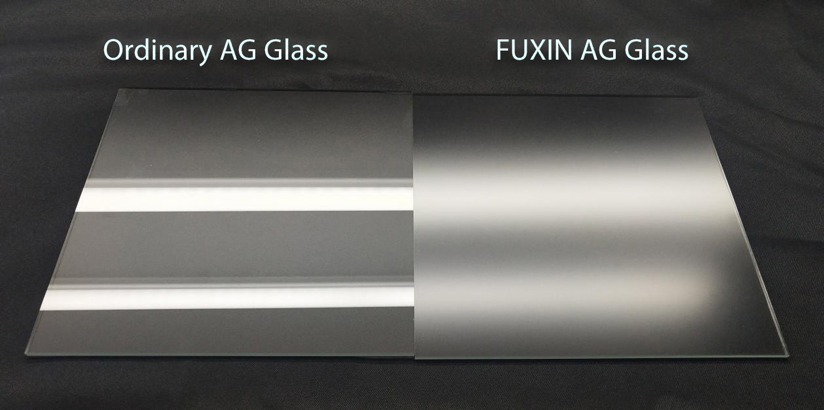
Anti-Glare (AG) glass is engineered to minimize reflections and glare from external light sources such as sunlight, overhead lamps, or bright ambient environments.
AG treatment typically involves chemical etching or a specialized coating process that creates a microscopically rough, matte surface on the glass. This changes specular (mirror-like) reflection into diffuse reflection, scattering light rays in multiple directions instead of bouncing them directly back at the viewer.
Significantly reduces eye strain and improves readability in bright or outdoor conditions.
Wider viewing angles with less interference from ambient light.
Matte appearance that can subtly hide minor smudges.
Outdoor digital signage, industrial control panels, automotive displays, medical monitors in well-lit rooms, and public information kiosks.
Potential drawbacks: The textured surface can slightly reduce image sharpness compared to fully clear glass, and it may feel less smooth to the touch.
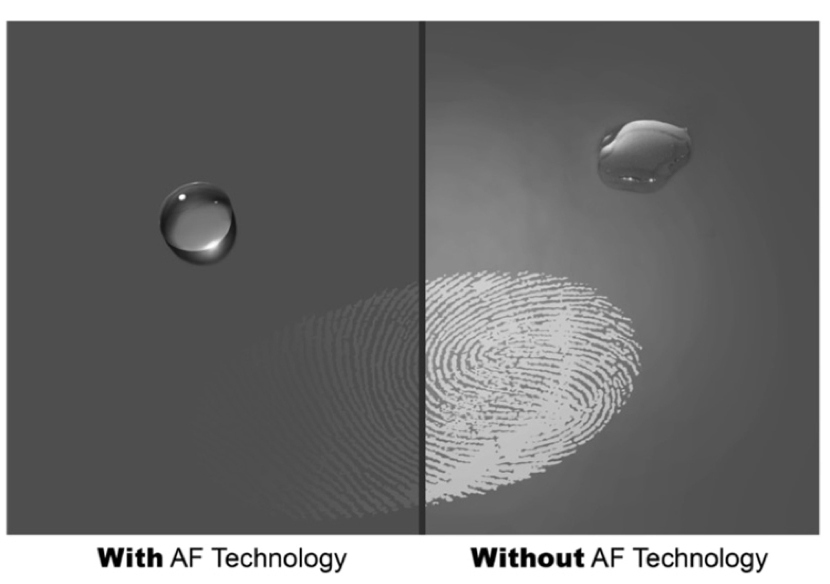
Anti-Fingerprint (AF) glass, also known as oleophobic or hydrophobic coating, focuses on surface cleanliness and user experience rather than light management.
AF Coating Working Principle
A thin nano-layer (often based on the lotus leaf effect) is applied via vacuum deposition or similar methods. This creates a low-surface-energy coating that repels oils, water, and dirt, preventing fingerprints and smudges from adhering strongly.
Key Advantages of AF Glass
Screens stay cleaner longer and are much easier to wipe clean.
Smooth, slick tactile feel ideal for frequent touch interaction.
Maintains high optical clarity and gloss without significant impact on light transmission.
Common applications: Smartphones, tablets, touch-screen POS systems, interactive kiosks, ATMs, and any high-touch consumer or commercial devices.
Potential drawbacks: It does not reduce glare or reflections. The coating can wear off over time with heavy use or aggressive cleaning, though quality formulations last years.
AG Anti-Glare Glass | AF Anti-Fingerprint Glass | |
Purpose | Reduce glare & reflections | Repel fingerprints & oils |
Surface Texture | Matte / Textured | Smooth / Glossy |
Light Control | Diffuses light (excellent in bright environments) | Minimal effect |
Touch Feel | Slightly rough | Slick & smooth |
Clarity | Good (may soften image slightly) | Excellent(preserves sharpness) |
Durability | High (etched versions very robust) | Good(coating can wear) |
Best Environments | Bright/outdoor lighting | High-touch indoor use |
Yes. In fact, hybrid solutions are becoming increasingly common for applications that require both glare reduction and fingerprint resistance.
Common combinations include:
AG + AF → Matte finish with easy cleaning—ideal for public kiosks and industrial touch panels
AG + AR + AF → Maximum performance for premium displays where glare reduction, clarity, and cleanliness all matter
However, it's important to note that combining multiple coatings requires careful engineering. The haze level, reflectance, coating durability, and cost can all change with each additional layer. Sample testing is essential before committing to production.
l Choose AG if your displays face challenging lighting conditions where visibility and reduced eye strain are priorities.
l Choose AF if cleanliness, ease of maintenance, and premium touch response matter most.
l For the best of both worlds, consider hybrid AG + AF coated glass, widely available from specialized manufacturers.
Does AF coating eliminate screen glare like AG glass?
No. AF oleophobic coating only repels oil and fingerprints; it has no ability to diffuse reflected light or reduce mirror glare under bright environments. If your screen faces strong light, AG treatment is mandatory.
Which coating lasts longer: etched AG or vacuum AF film?
Chemically etched AG texture is formed inside the glass substrate and will never wear off. AF is an attached nano thin film, which will gradually degrade after long-term heavy friction and repeated disinfection wiping.
Can I apply AF coating on top of existing AG matte glass?
A: Yes. FUXIN supports one-stop AG etching followed by vacuum AF sputtering composite processing, delivering matte anti-glare and anti-fingerprint performance on a single tempered glass sheet.
Low-haze customized AG glass only creates mild softness without losing core image details. For ultra-high definition screens, we provide low-haze AG formula to balance anti-glare and visual sharpness.
Industrial control touch panels, retail self-service kiosks, outdoor advertising screens and hospital medical monitors that face both bright lighting and frequent human touching.


Copyright © 2025 Fuxin Glass (Dongguan City) Technology Co., Ltd. All Rights Reserved